Removing Trees That Put Your Property at Risk
Tree Removal in Charlotte for dead trees, storm-damaged limbs, and trunks leaning over structures
L & A Vegetation Services provides tree removal for residential and commercial properties throughout Charlotte when trees become hazardous, die, or threaten buildings and power lines. You may notice a tree with a split trunk after a recent storm, a leaning oak pressing against your roof, or a dead pine with brittle branches ready to fall. Removing these trees requires planning to protect your landscaping, driveway, and neighboring structures while the tree comes down in sections.
The work begins with an assessment of the tree's condition, lean, and surroundings. If a tree leans toward your home or has large limbs overhanging a fence, the crew rigs ropes and uses controlled cuts to direct each section away from those obstacles. Dead trees often lack the structural integrity of live wood, which changes how cuts are made and where climbers position themselves. In Charlotte, summer storms can leave trees with cracked trunks or partially uprooted root systems that make removal more urgent and require additional rigging to prevent sudden collapse during cutting.
Reach out to L & A Vegetation Services for a free estimate if a tree on your property shows signs of instability or decay.
What Happens During and After the Tree Comes Down
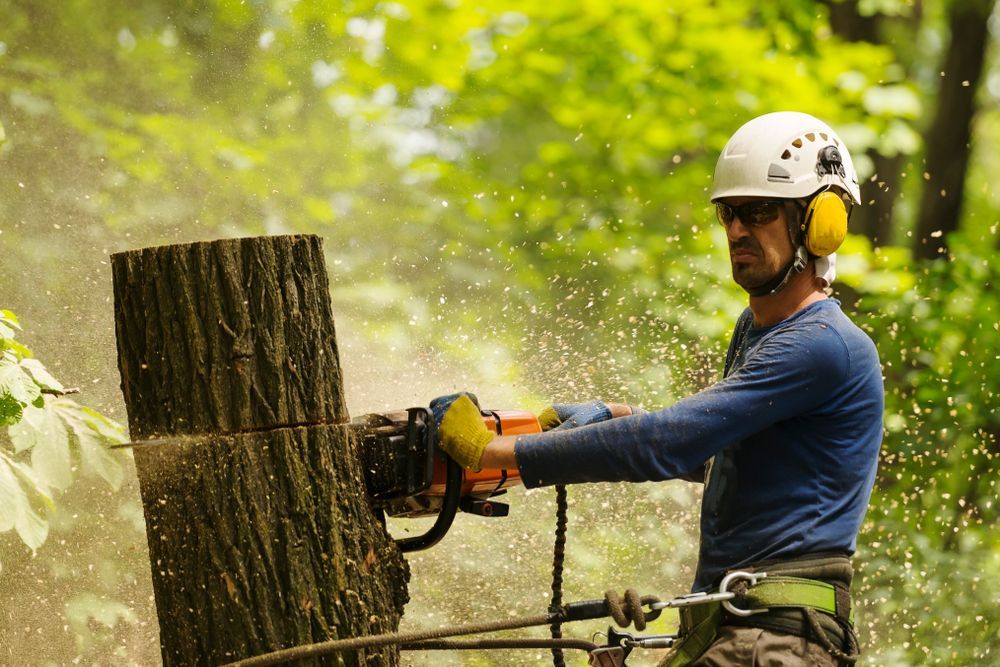
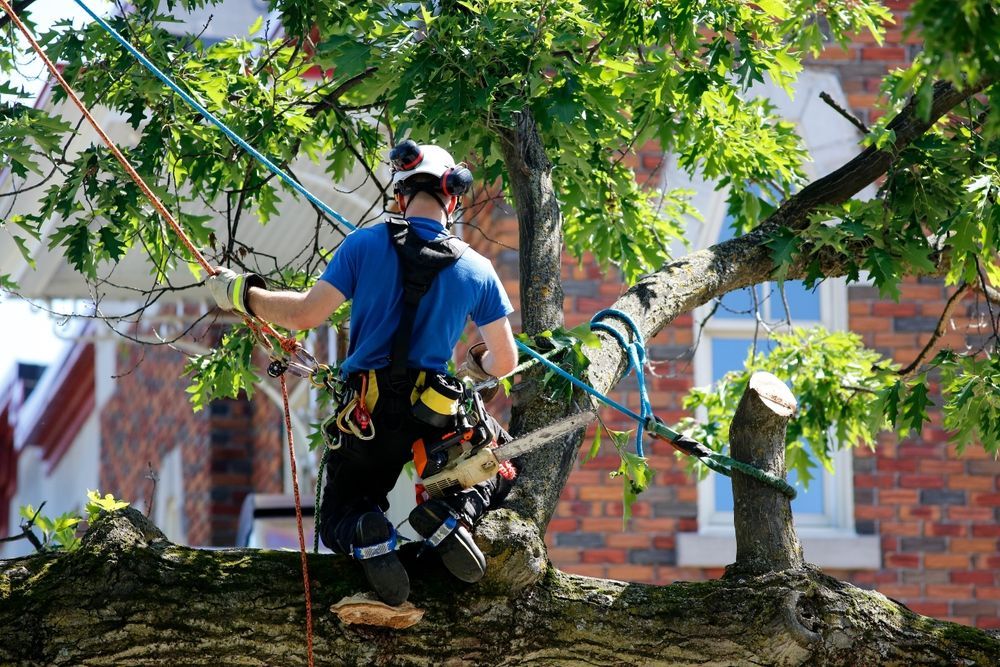
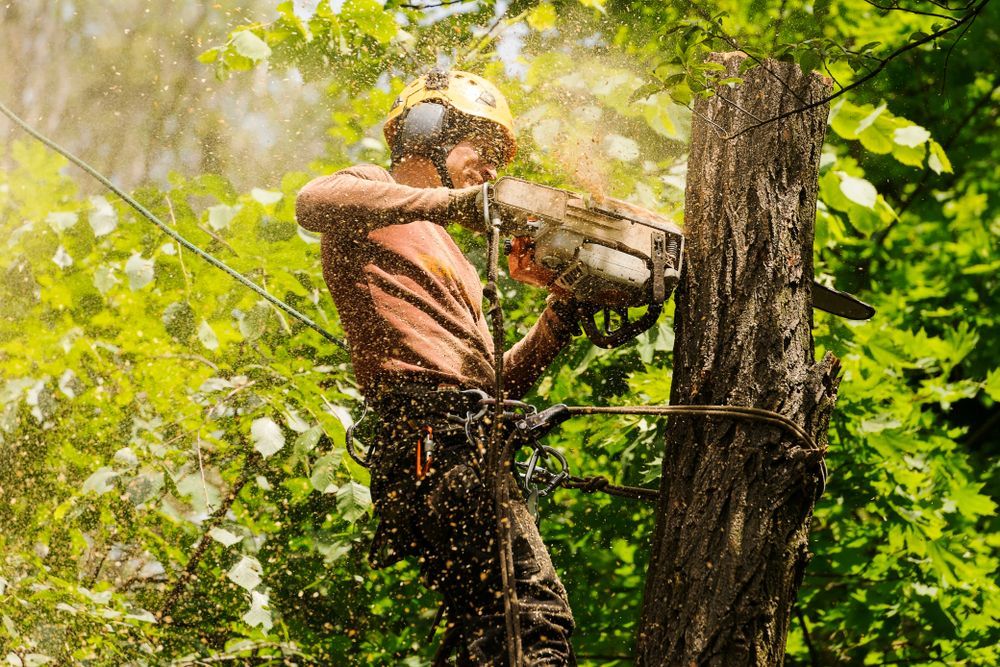
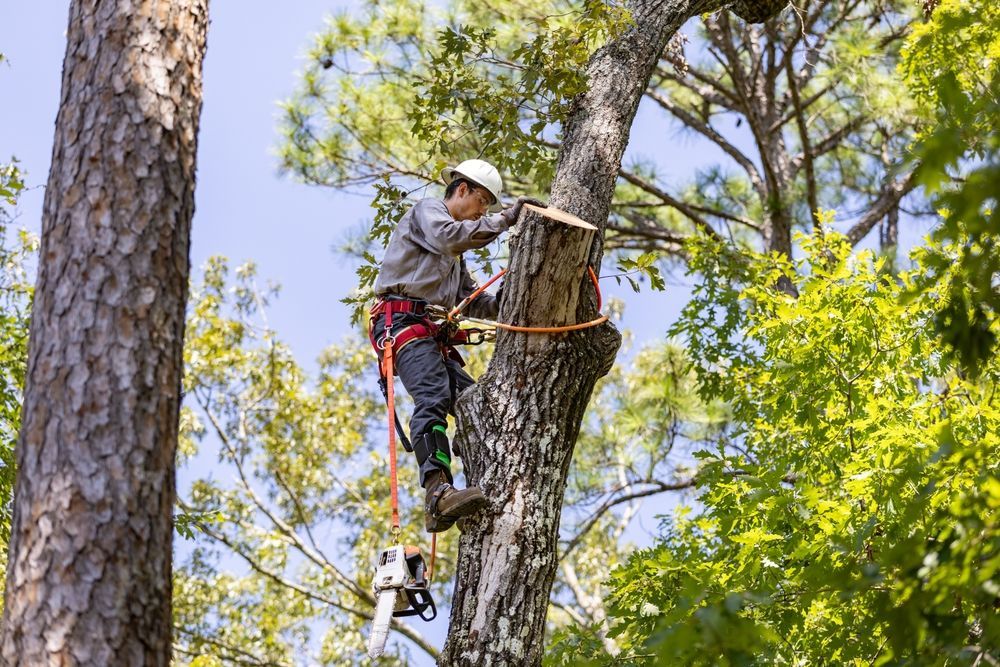
Your crew uses chainsaws, rigging systems, and sometimes a crane for trees near structures or in tight yards where dropping whole sections is not possible. Climbers remove upper branches first, lowering them with ropes to avoid damage to flower beds, walkways, or siding. Once the canopy is clear, the trunk is cut into manageable logs and either hauled away or cut to length if you plan to use the wood.
After the tree is removed, you will see an open space where the canopy once stood, along with a stump at ground level unless grinding is included. The grass around the trunk may show scuff marks from equipment, and any wood chips or sawdust are cleared from driveways and planting areas. You can walk freely around the area without ducking under low branches or worrying about falling limbs during the next windstorm.
Stump grinding is not automatically included in tree removal and must be scheduled separately if you want the base taken below grade. The crew does not repair turf or replant areas where the tree stood, though the site is left clear of debris. L & A Vegetation Services handles both residential jobs in fenced backyards and larger commercial removals where access routes and equipment staging require more coordination.
Common Questions About Removing Trees in Charlotte
Homeowners and property managers often want to know what to expect before, during, and after a tree is cut down and hauled away.
How long does it take to remove a tree?
Most residential removals are completed in a few hours, though larger trees near structures or with extensive decay may take a full day depending on rigging requirements and site access.
What happens if the tree is touching my house?
The crew uses ropes and controlled cuts to pull sections away from the roofline as they work down the trunk, preventing branches from scraping siding or breaking shingles during the process.
Why does storm damage make removal more urgent?
A tree with a cracked trunk or exposed roots can fall without warning, especially during high winds common in Charlotte during spring and summer months.
What equipment is used for tight spaces?
Climbers with harnesses and rigging gear are used when cranes cannot access the yard, allowing limbs to be lowered by hand between fences and garden beds.
When should I remove a dead tree?
Dead trees lose structural strength over time and should be removed before limbs begin dropping on their own, particularly if the tree stands near walkways, driveways, or utility lines.
If you have a tree that needs to come down and want to understand timing, access, and site cleanup, contact L & A Vegetation Services in Charlotte for a walkthrough and a free estimate.